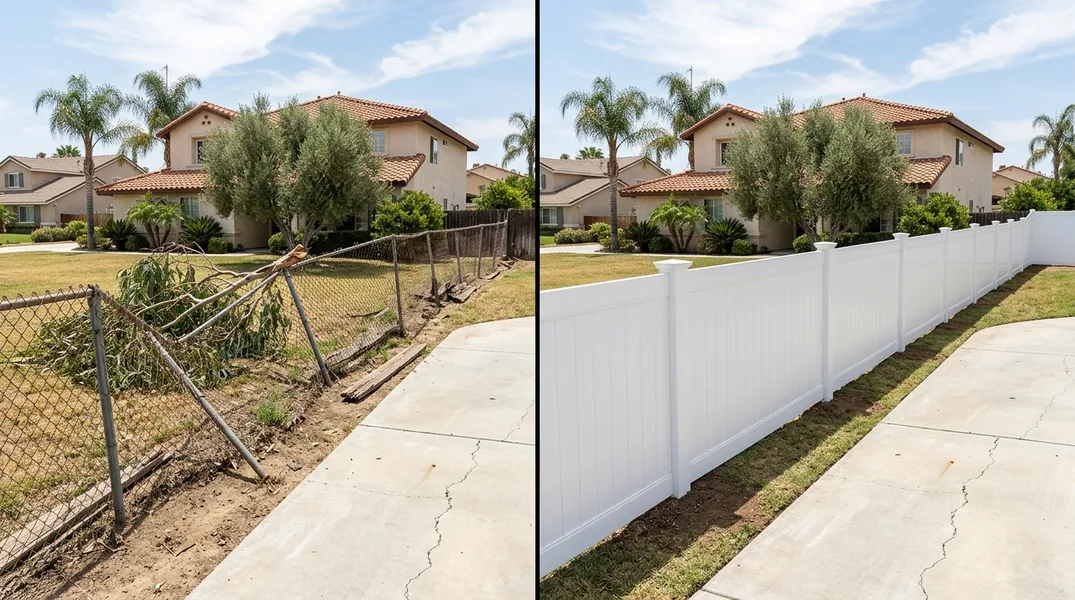
Understanding Fence on Property Line Rights in New Subdivisions
New residential developments in the Inland Empire, particularly around Eastvale and Jurupa Valley, are expanding rapidly. As families move into these fresh communities, one of the most common questions homeowners ask is: who actually owns the fence that sits on the property line between two homes? This question becomes especially important when you're planning your landscaping, considering privacy, or dealing with a neighbor about fence maintenance and repairs.
The answer isn't always straightforward, and it depends heavily on local ordinances, developer specifications, and what your property deed actually states. In many new subdivisions, developers install perimeter fencing and lot-line fencing according to a master plan. Some of these fences are designated as shared responsibility, while others belong exclusively to one property owner. Understanding these distinctions before you buy or make improvements can save you thousands of dollars in disputes and unnecessary repairs.
Who Pays for Fence Between Neighbors: The Legal Framework
The question of who pays for fence between neighbors is governed by what's called the 'spite fence' or 'good neighbor fence' doctrine in California law. Generally speaking, if a fence is built on the property line, both neighbors may share responsibility for its maintenance and repair, even if only one neighbor built it initially. However, this isn't universal, and your specific situation depends on your property's deed restrictions, homeowners association (HOA) rules, and local municipal codes in Riverside and surrounding areas.
In new subdivisions near Eastvale and Jurupa Valley, most developers specify in the CC&Rs (Covenants, Conditions, and Restrictions) which party is responsible for which fences. Some developers assign rear-yard fences to individual homeowners, while side-yard fences might be shared. Front-yard fences are often the responsibility of the HOA or individual homeowners, depending on the community's design. Before assuming responsibility for any fence repair or replacement, review your property documents carefully or consult with a local attorney familiar with your subdivision's specific rules.
The Good Neighbor Fence Concept and Your Obligations
The 'good neighbor fence' is more of a principle than a law, but it carries real weight in property disputes. This concept suggests that neighbors should work together to maintain shared fences in good condition, splitting costs fairly. In many cases, if you want to install a new fence or significantly upgrade an existing one on or near the property line, you're expected to notify your neighbor and give them the opportunity to contribute to the cost. If they refuse, you can still build, but you may lose the right to ask them to pay for it later.
In developing neighborhoods around Jurupa Valley and Eastvale, this principle is especially important because properties are newer and fences are often in good condition. If you're considering Wood & Privacy Fence Installation to enhance your home's privacy or curb appeal, reaching out to your neighbor first demonstrates goodwill and can prevent future conflicts. Many disputes arise simply because one neighbor made unilateral decisions without communication. A simple conversation, followed by a written agreement about cost-sharing, can protect both parties and create a smoother installation process.
Fence on Property Line: Easement and Boundary Considerations
When a fence sits directly on the property line, it's technically on both properties simultaneously, which creates shared ownership and responsibility in most situations. However, some property lines are established with easements that affect who can build what and where. An easement is a legal right granted to someone else to use a portion of your property for a specific purpose, such as utility access or drainage. If your property line has an easement, you may not be able to install certain types of fencing without permission from the easement holder, which could be the city, county, or a utility company.
Before installing any fence in a new subdivision, have your property surveyed if you're unsure about the exact boundary line. Mistakes in fence placement can lead to costly removal and reinstallation. In Riverside and surrounding communities, many developers provide lot-line maps with new homes, but these aren't always 100 percent accurate. A professional surveyor will identify easements, boundary lines, and any restrictions that might affect your fencing plans. Once you know exactly where your property ends and your neighbor's begins, you can make informed decisions about installation and cost allocation.
Neighbor Fence Law: Local Ordinances in the Inland Empire
California state law provides a general framework for fence disputes, but individual cities and counties add their own rules. In the Inland Empire, municipalities like Jurupa Valley and Eastvale have specific ordinances about fence height, setbacks, materials, and maintenance standards. For example, many communities require that fences in rear yards be no taller than six feet, while front-yard fences may be limited to four feet. Some areas also specify that fences must be maintained in good condition and cannot become a nuisance to neighbors.
Neighbor fence law also typically addresses the 'spite fence' scenario, where someone builds a fence primarily to annoy or harm a neighbor rather than for legitimate purposes like privacy or security. If a fence is deemed a spite fence, a neighbor can take legal action to have it removed or modified. Additionally, many HOAs in new subdivisions have their own fence guidelines that are stricter than municipal codes. Before you hire a contractor for any fencing project, check with your HOA and your city's building department to ensure your plans comply with all applicable rules. This step prevents costly mistakes and ensures your investment is protected.
Choosing the Right Fence Installation Professional Near You
Once you've clarified the legal and financial responsibilities for your fence, the next step is selecting a qualified contractor to handle the installation. Whether you're interested in Wood & Privacy Fence Installation, Vinyl & PVC Fence Installation, or another style, working with an experienced local company ensures the job is done right the first time. A professional installer will understand local codes, help you navigate property line issues, and communicate with your neighbor if needed.
Riverside Fence Company serves the Inland Empire, including new subdivisions in Eastvale and Jurupa Valley, with expertise in all fence types and styles. Our team can review your property documents, clarify responsibility issues, and recommend the best fencing solution for your situation. We handle everything from initial consultation through final installation, ensuring your fence meets all legal requirements and enhances your home's value. If you're ready to move forward with your fencing project or have questions about costs and timelines, contact us at (951) 848-5510 or request a free estimate today. Let us help you build a fence that your neighbors will appreciate and that protects your investment for years to come.
Looking for a professional fence contractor in Riverside? Riverside Fence Company responds fast for all your fence needs.
Get a Free Quote