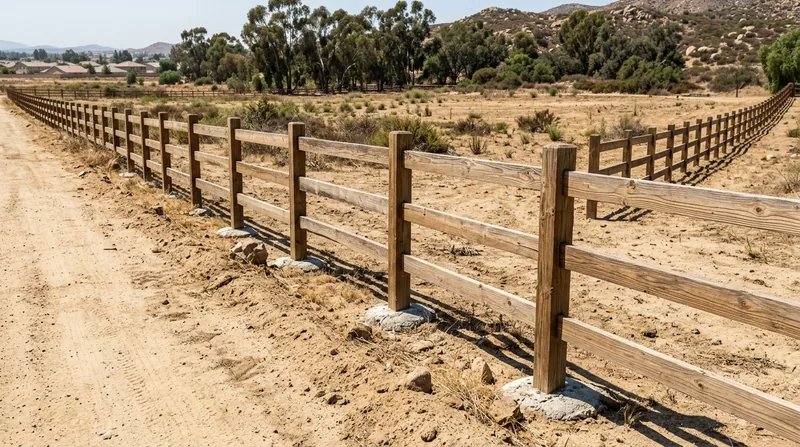




Farm fence installation in Riverside requires posts set deep enough to hold through loose granitic soil and Santa Ana wind, with wire and rail styles matched to open acreage and livestock needs. Riverside's outer subdivisions sit on terrain where slope, drainage, and wind exposure swing sharply over short distances, so the racked-versus-stepped decision and footing specification are set lot by lot rather than by regional default. Dry summers and wet winters swing the soil between shrink and swell, which works a post loose over years. We set posts in concrete with spacing and depth calibrated to your land, and we choose materials and fasteners to outlast the climate. Whether you need ranch fence installation for pasture, split rail fence installation for visual openness, no climb horse fence for livestock safety, pipe fence installation for durability, or barbed wire fence installation for perimeter security, we size the job to the site and the animals. Call (951) 848-5510 for a free estimate, or read on to understand what holds up and why.
Why Farm and Ranch Fencing Matters in Riverside's Open Lots
Riverside's acreage sits on terrain that tests fencing. Granitic soils drain fast in summer and swell when winter rains saturate the ground, and Santa Ana winds put lateral pressure on posts and rails. A fence set shallow or in tamped soil alone will work loose within 2 to 3 seasons. Posts set in concrete, spaced and angled to shed water at the ground line, stay put for decades. The choice between wire, rail, and hybrid systems depends on what you are containing, how many animals, and whether the fence is meant to define a boundary or hold livestock.
- Posts set in concrete at depths matched to soil type and wind load stay put through seasonal shrink-swell cycles.
- Wire fencing (smooth, barbed, or no-climb mesh) works for pasture and perimeter, and costs less per linear foot than rail.
- Rail fencing (split rail, pipe, or board) offers visibility and durability, and is preferred for horse and high-value livestock enclosures.
- Hybrid systems (rail with wire backing) combine the strength of rail with the containment of mesh.
- Proper drainage at the post base prevents rot and frost heave, extending post life by 10 to 15 years.
A well-built farm fence holds livestock safely and defines your property boundary without constant repair.
Key info: Riverside County and the City of Riverside set fence height and setback rules for residential and rural zoned land. Check with the Riverside County Planning Department or your local building department before finalizing design. Deed restrictions and ranch covenants may also govern material, height, and color. We work from your survey and install on the line you identify; a licensed land surveyor is the only person who can determine a true property boundary.
For more on how permits and regulations work, see our fence repair page, which covers the inspection and approval process.
How We Install Farm and Ranch Fencing on Riverside Acreage
Every farm and ranch site is different. We start by walking the fence line with you, noting slope, soil type, wind exposure, and what the fence needs to contain. We then call 811 for a free utility locate (required by California law before digging), and we set posts at depths and spacings that match your soil and the lateral load the fence will carry. For wire fencing, we use tension bands and stretcher bars to keep mesh taut and prevent sagging. For rail fencing, we set rails level or racked to follow slope, and we use anti-sag bracing on tall runs. Every post is set in concrete unless you specifically choose tamped soil, and every connection is fastened with corrosion-resistant hardware.
- We call 811 to locate utilities before we dig any post hole, protecting you from costly accidents.
- We measure and mark the fence line, accounting for slope and existing improvements.
- We dig post holes to the depth required by soil type and load, and set posts plumb in concrete.
- We hang rails or string wire using tension bands, stretcher bars, and anti-sag bracing to keep the fence tight.
- We inspect every connection and fastener before we leave the site.
The result is a fence that holds up through drought, winter storms, and the daily stress of livestock and weather.
Local example: A 5-acre ranch in Norco with sandy loam soil and exposed to Santa Ana wind needed 600 linear feet of no-climb horse fence. We set posts 3 feet deep in concrete on 6-foot centers, ran 4-inch mesh backed by 2x4 rails, and installed anti-sag bracing every 50 feet. The fence has held for 8 years without a sagging panel or a loose post, and the customer has never needed a repair call.
Learn more about our post repair and replacement service for older fences that need reinforcement.
Farm and Ranch Fencing Methods for Different Sites and Animals
| Approach | Description | Best for |
|---|---|---|
| Wire Fencing (Barbed or Smooth) | Posts set in concrete every 6 to 8 feet, wire strung tight and stapled or clipped to posts. Barbed wire for perimeter and cattle; smooth wire for horses and sheep. | Budget-conscious pasture and perimeter fencing on acreage. Cattle and mixed livestock. |
| No-Climb Horse Fence | 4-inch galvanized mesh backed by 2x4 or 2x6 rails, set on posts 3 feet deep. Prevents hooves from catching and reduces injury risk. | Horse pastures and high-value livestock. Visible, safe, and long-lasting (15+ years). |
| Split Rail or Pipe Fencing | Wooden rails (cedar or pressure-treated pine) or steel pipe mortised into posts set in concrete. Open design allows visibility across the property. | Ranches that prioritize appearance and land visibility. Decorative and functional for horses and small stock. |
| Hybrid (Rail + Wire) | Rails for strength and appearance, mesh or wire underneath for containment. Posts set deep in concrete; rails mortised or bolted, wire stapled or clipped. | Mixed livestock and high-security perimeters. Combines durability, containment, and visual appeal. |
Each method is sized to your soil, slope, and animal type. We specify post spacing, depth, and concrete volume based on the site survey.
Farm and Ranch Fencing Cost in Riverside: What to Expect
Farm and ranch fencing starts at $14 per linear foot for basic barbed wire on posts set in concrete, and ranges up to $35 to $50 per linear foot for no-climb horse fence with full rail backing and anti-sag bracing. The main factors that move the price are the type of wire or rail you choose, the depth and spacing of posts (which depends on soil type and wind load), the slope of the land (racked versus stepped installation adds labor), and the distance from the property line to access roads (which affects equipment and crew time). A 600-linear-foot horse pasture fence in Riverside typically runs $8,000 to $15,000 installed, depending on whether you choose wire mesh or rail, and whether the ground is level or sloped.
We recommend getting 2 to 3 estimates from contractors who will walk the site and explain why they are proposing a certain post spacing and depth. A cheap estimate that skips the concrete or uses shallow post holes will cost you repairs in 2 to 3 years. See our full pricing page for detailed breakdowns by material and job size.
Call (951) 848-5510 for a free on-site estimate. We respond within 24 hours and will explain every line item before we start work.
What to Look for When Hiring Farm and Ranch Fencing Contractors Near Riverside
Farm fencing is not a weekend DIY job on acreage. A poor installation will shift and sag, leaving livestock loose or property boundaries blurred. When you call a contractor, ask for proof of general liability and workers' compensation insurance, and ask for a certificate of insurance before work starts. In California, fence installation is regulated by the Contractors State License Board (CSLB). Projects at or above $1,000 in combined labor and materials, or any job that requires a building permit, must be performed by a C-13 Fencing Contractor license holder. Verify that your contractor holds that license (you can check the CSLB website). Ask for references, and call at least two to ask whether the fence is still tight and whether the contractor stood behind the work.
Check whether your property is in a master-planned community or subject to deed restrictions, and confirm that the fence design meets HOA and county rules. If you are fencing a property line, ask your neighbor whether they want to cost-share (California law does not require it, but it is common courtesy). Walk the fence line together and agree on the location before work begins.
We are fully insured with a certificate of insurance available on request. We have been in business since 2014, and we are an AFA Member Installer (American Fence Association). Call (951) 848-5510 or request a free estimate online to get started.
Farm & Ranch Fencing in Riverside: Pricing Guide
| Service | Price | Details |
|---|---|---|
| Barbed Wire Fencing | Starting at $14/ft | Posts set in concrete on 8-foot centers, barbed wire strung tight and stapled. Perimeter and cattle containment. |
| No-Climb Horse Fence | Starting at $28/ft | 4-inch galvanized mesh with 2x4 rail backing, posts 3 feet deep in concrete on 6-foot centers. High-value livestock. |
| Split Rail or Pipe Fencing | Starting at $22/ft | Cedar or pressure-treated rails, or steel pipe, mortised into posts set in concrete. Decorative and functional for ranches. |
| Hybrid Rail and Wire Fencing | Starting at $32/ft | Rails for strength and appearance, mesh underneath for containment. Posts deep in concrete with anti-sag bracing on tall runs. |
| Sloped or Complex Terrain | On estimate | Racked or stepped installation on slopes, deeper post holes in loose soil, and extra bracing add labor and materials. |
| Estimate and Travel | Free | Response within 24 hours. No call-out fee or mileage charge in Riverside and surrounding service areas. |
Indicative pricing, the exact cost depends on square footage, finish, and site access. Free personalized estimate within 24h at (951) 848-5510.


